Author: Kayla Isomura

  • Celebrating over 30 years at CNH with Alison Merton

    Celebrating over 30 years at CNH with Alison Merton

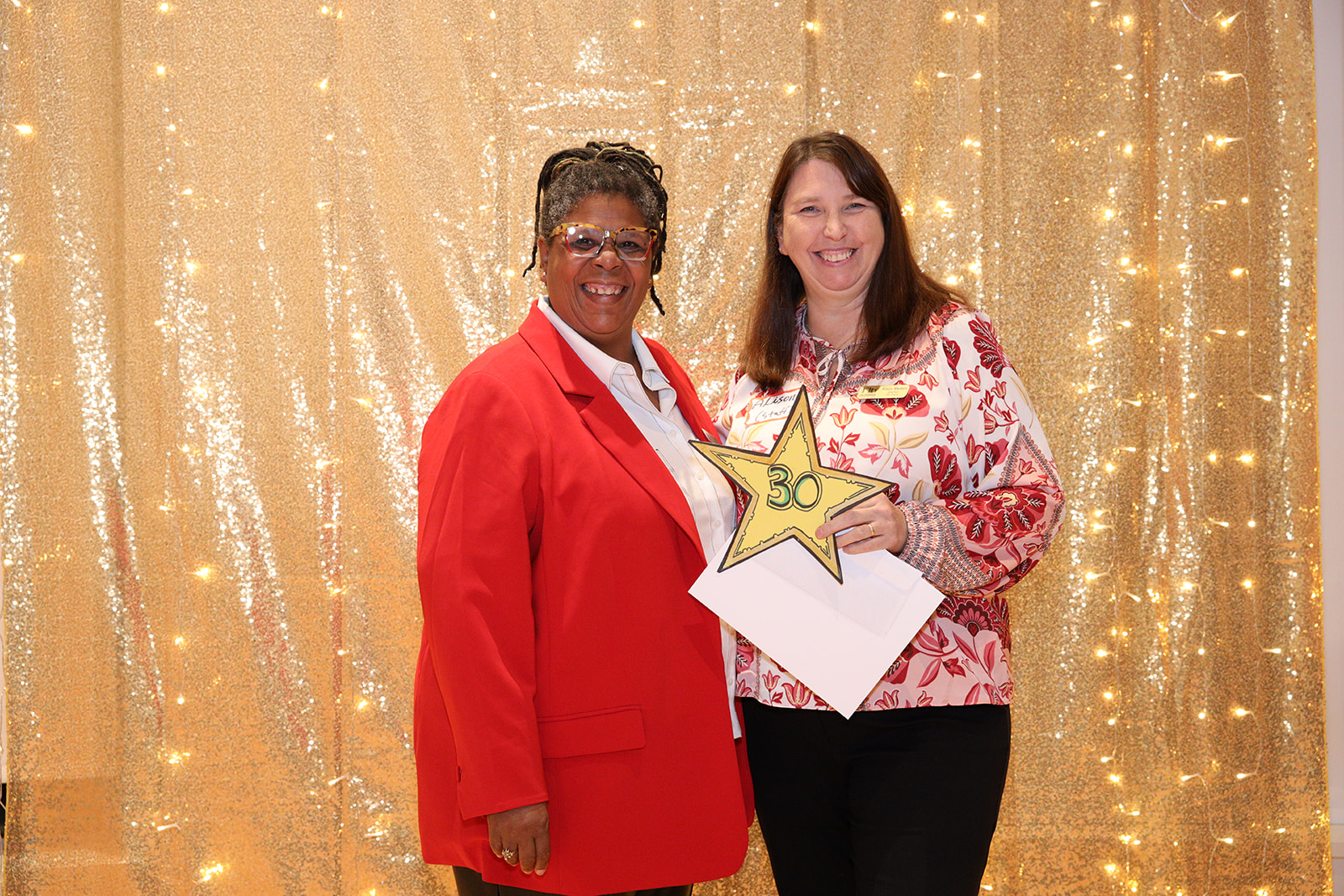
    Collingwood Neighbourhood House (CNH) proudly recognizes its long-serving staff members. At this year’s Annual General Meeting (AGM), CNH staff and contractors who have reached the milestones of 5, 10, 15, 20, 25 and 30 years of service and dedication to the neighbourhood house, were thanked by the Board of Directors.

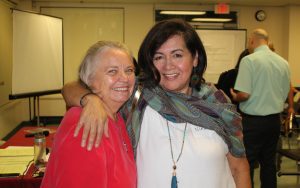
    This year, we recognize and celebrate Alison Merton, Director of the Early Years, for over 30 years of service.

    “This year marks an incredible milestone for Alison Merton—30 years of dedicated service to CNH,” said Betty Lepps, executive director of CNH. “When I first met Alison over a year ago, she shared that she had been with CNH for nearly three decades, working in Early Years.”

    “My immediate impression was one of deep dedication, a genuine love for early childhood education, and a strong connection to the CNH community.”

    As someone whose own career began in Early Years, Betty said that those who stay in the field are often the fiercest advocates for children, families, and fellow educators.

    “Alison embodies this spirit—creating spaces where children and parents can learn, thrive, and enjoy their early years together,” she said.

    Alison’s journey began in September 1995, shortly after emigrating from England. Within a week of arriving, she took a casual childcare worker position at CNH—and never left. With her Early Childhood Education and Infant and Toddler Certification, Alison has built a career she’s loved for over 35 years. One of the highlights of her professional journey was a development trip to Reggio Emilia, a testament to her commitment to lifelong learning and excellence in early childhood education.

    Over the years, Alison has worked in every role within CNH’s childcare programs. Her connection to CNH runs deep—not only professionally, but personally, as both her children attended CNH childcare programs. Her countless memories at CNH include everything from classroom moments to driving a 26-foot U-Haul truck during COVID to pick up donated food—just one example of her willingness to go above and beyond.

    Alison stayed with CNH because of its role in the community and its family-friendly approach. She often says that the people who work in a neighbourhood house are special—and she is certainly one of them. Her integrity, kindness, compassion, and unwavering advocacy for quality, affordable childcare and fair wages for Early Childhood Educators make her an invaluable part of the CNH team.

    “It’s been a pleasure to work alongside Alison and learn from her,” said Betty. “She continues to be a treasured asset at CNH, and we’re hopeful for many more years of her wisdom, warmth, and leadership.”

    Thank you, Alison, and many congratulations on this milestone!
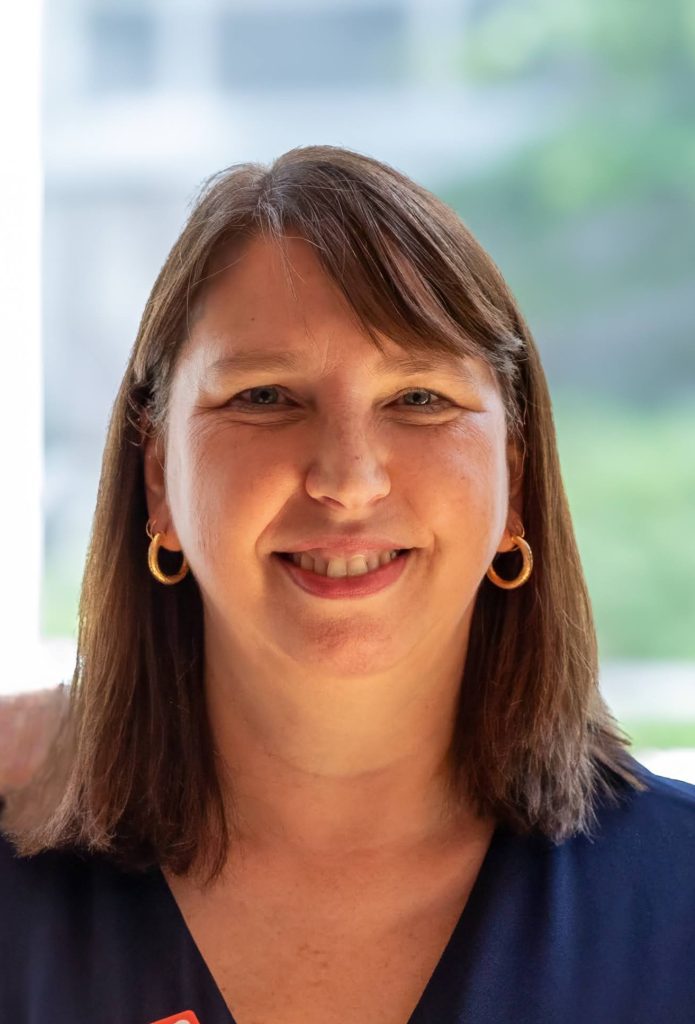
    A close-up of a woman with shoulder-length brown hair and side bangs smiling towards the camera.
    Alison Merton
  • Creating relief through the Medical Assistance Fund

    Creating relief through the Medical Assistance Fund

    Thanks to a generous donation from Darick Construction, Collingwood Neighbourhood House (CNH) was able to support 16 people through the Medical Assistance Fund earlier this year. 

    Announced in March 2025, the fund was established to provide financial support to individuals facing financial hardship in the neighbourhood. Funds were meant to cover medical treatments, medications, tests, scans and other necessary services.  

    “Darick Construction made a donation to CNH and specifically asked that a portion be directed to community members with medical needs,” explained Amir Sabbaghan, Annex and Recreation Manager at CNH. “This aligns with their company mission of building better lives through practical support. Based on that gift, we set up the Medical Assistance Fund to issue small, rapid grants to residents facing urgent health-related costs.” 

    As a result, he noticed many of the applicants for the fund were underinsured or between coverage. This included newcomers, students and those waiting for MSP reactivation. Several of them, he said, were on waitlists for surgery and/or specialist appointments, and needed stopgap supports to manage in the meantime. 

    For Melissa, one of the fund recipients, accessing the Medical Assistance Fund was a relief as someone who faces multiple barriers to accessing healthcare. 

    “[G]overnment disability benefits are incredibly low given the cost of living in BC,” they said. “Paying for medical expenses has been a massive burden financially, and has led to a lot of stress and having to make hard decisions like choosing between paying for food or paying for medical expenses.” 

    A regular participant of CNH’s free food program, Melissa said it has been difficult to find healthcare practitioners with affordable services in the neighbourhood. In addition to having difficulty travelling to appointments far from home, Melissa said they are unable to work due to their medical conditions and are reliant on government disability benefits.  

    “The medical assistance fund led to massive relief that a significant chunk of my yearly medical expenses was covered by this fund,” said Melissa. “I’m incredibly grateful to be a recipient.” 

    Amir said that the gratitude from community members like Melissa has been overwhelming with people sharing how a relatively small grant relieved a major burden. 

    “This initiative has made a meaningful difference in the lives of many, and we are incredibly grateful for the community partnerships that allows us to carry out this kind of work,” he said. “We believe this fund has had a real impact.” 

    Thank you to Darick Construction for making this fund possible. To make your own impact on the CNH community, visit cnh.bc.ca/donate. 

  • More than just dance, hula is a form of communication and connection at CNH

    More than just dance, hula is a form of communication and connection at CNH

    The mention of the word “hula” may call into mind grass skirts, ukuleles, and leis, but according to Poh Tan and Rani Wangsawidjaya, who teach hula at Collingwood Neighbourhood House (CNH), this Indigenous Hawaiʻian dance is not just that, it’s a way to communicate history, stories and a way to connect with each other to the earth.

    “Hula is basically the embodied way of communicating aloha and connection to the land. There’s a really, really deep meaning about what aloha means. It’s not just about love and hello and goodbye, but it is a sense of being in place and a sense of understanding our relationship with our family, our hula sisters, and earth, all combined with dance,” said Poh. 

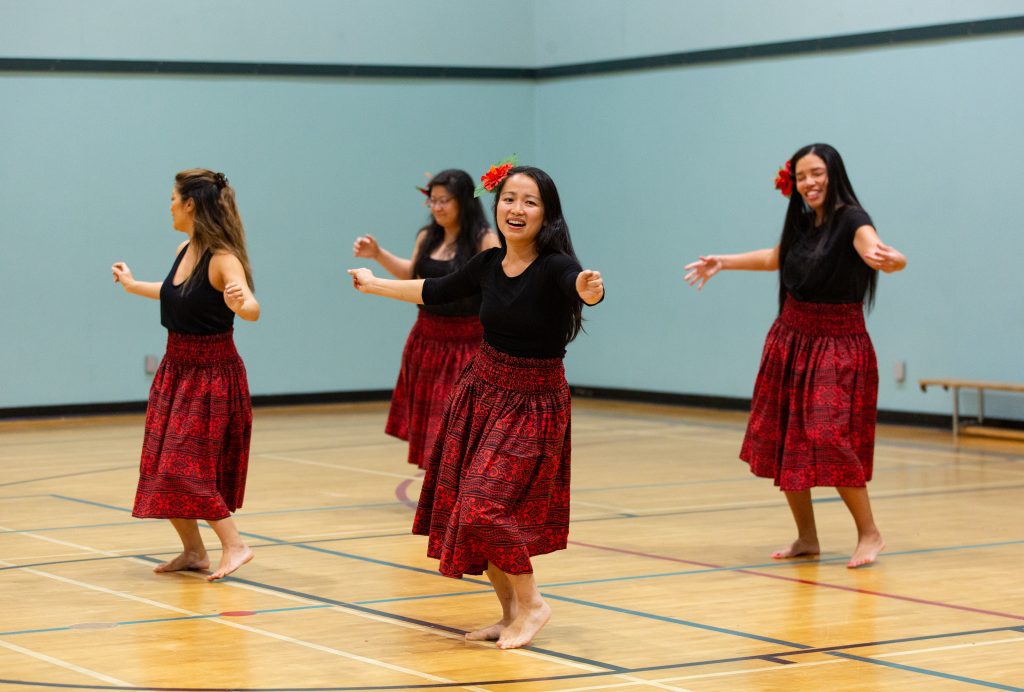
    A group of four people with long hair dance bareboot wearing long red skirts and black shirts inside the gym at CNH
    Participants of the hula class at Collingwood Neighbourhood House perform at a volunteer appreciation event in 2023.

    In addition to learning about the past and connecting it with the present, hula also gives us guidance for the future, Rani said.

    “We are not just there to learn about dance movements or learn how to dance together as a group or, you know, learn how to express things, but it’s also learning about ourselves, learning about the environment and how we can embody or maybe personify the environment because they really are living beings just like us. And hula is one way that we can communicate that to our group,” she said.

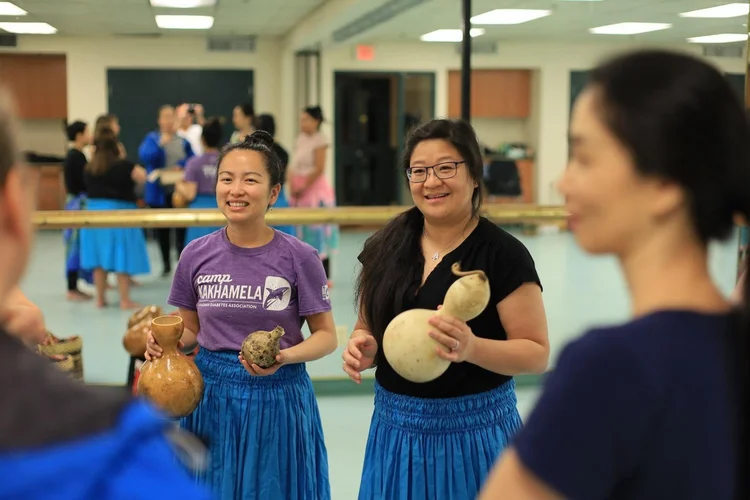
    Two people stand inside a program room at CNH holding instruments made from gourds
    Rani and Poh teach hula and storytelling at Collingwood Neighbourhood House.

    Poh and Rani’s hula journeys can be traced back to one person: Josie DeBaat, who started the Wahine South Sea Dancers in the basement of her home in 1971, and taught Polynesian dance for decades until her death in 2022.  

    Meanwhile, Josie had also been Hula Along instructor Ingrid Guo’s introduction to hula. She was encouraged by her late husband to take Josie’s class after they watched her seniors’ class perform at Renfrew Community Centre.

    “I learned not only dance but also her positive way towards life. She experienced a lot of tough events during her life… but she always kept a big smile in the class. She taught us to dance from our hearts,” Ingrid said.

    Although Poh and her co-instructor Rani had been dancing with their kumu (teacher) for two and three decades respectively, Josie’s passing became the cusp of them connecting with each other and working to keep the community together. What started out as Zoom gatherings eventually led to a pilot project with Emily Rees, former director of community development at CNH.

    “When she passed, there was a sense of not just a significant loss, like the lei broke,” Poh said.

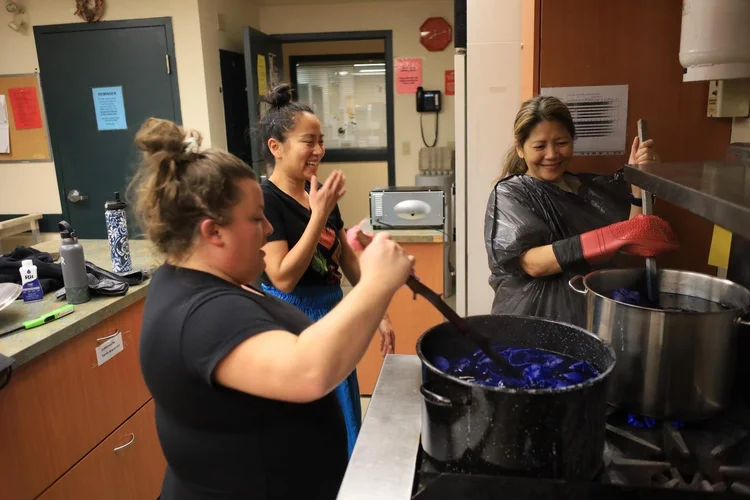
    Three people stand around a commercial stove inside the kitchen at CNH
    Participants of the hula program at Collingwood Neighbourhood House gather inside the community kitchen to dye fabrics.

    “I always thought that mine and Poh’s thing is just this little seed, this new thing that we’re doing, which is branching off a little bit… but now I really see it as like we have reconnected our lei. With our genealogy, with our lei that Josie braided for us, we’re continuing the same braid. It’s not a new braid. It’s new for us, but it’s the same all these other generations,” added Rani.

    Grief was also something that pushed Ingrid to teach hula. After her husband’s passing in 2023, she kept herself busy with teaching and other volunteer work. Through this, she was able to find and foster community within her classes.

    “People in the class are very nice and close… by the end of the last class in the season, people will exchange gifts, flowers from their garden, [and more],” she said.

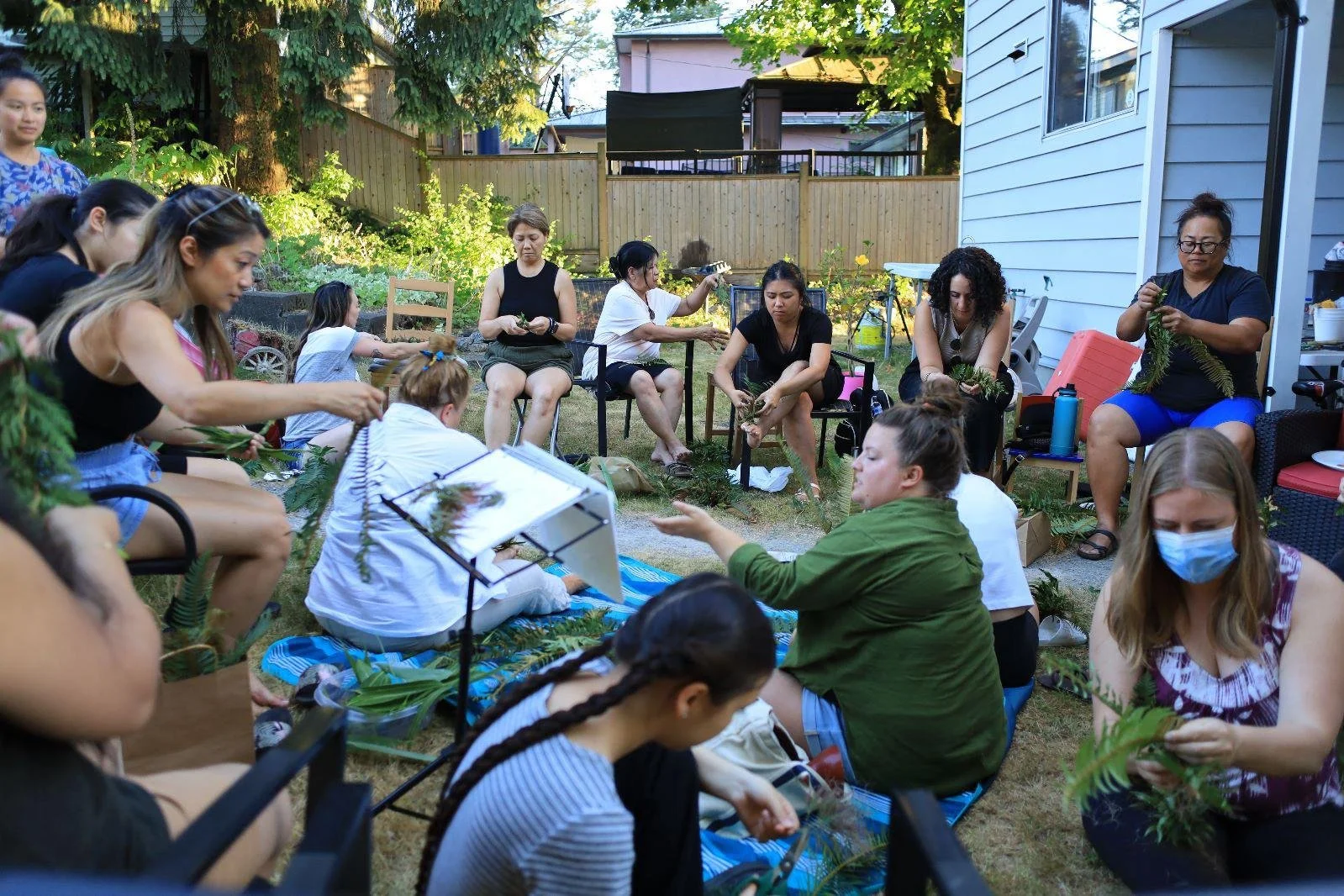
    Through their hula classes, not only have Rani and Poh been able to keep their hula community together, they have also been able to deepen their connections through other performance-related activities such as making their own skirts.  

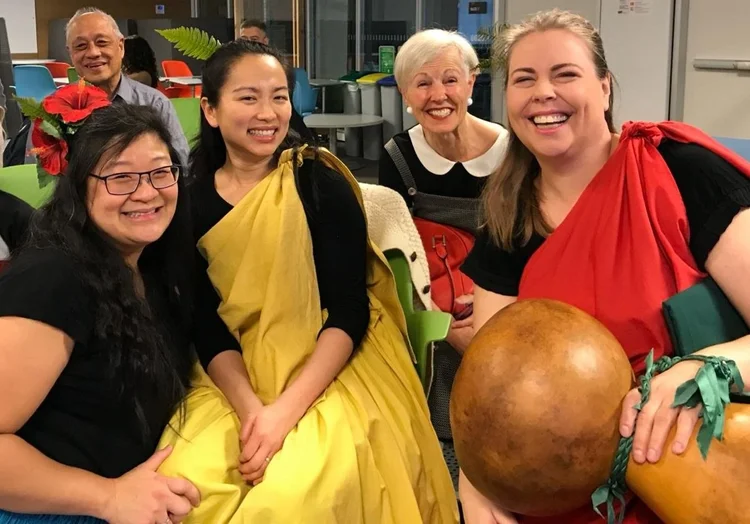
    A group photo of some of the hula instructors and participants
    A group photo of some of the hula instructors and participants.

    “That community feel from wearing something that you made in a dance you just learned just adds to the feels that this is not just another dance class,” Poh said.

    Teaching hula at CNH has given all three instructors a sense of belonging, especially for Rani, who also works at the RISE Community Health Centre as a dietitian.

    “It’s the way my life has become one where my hula was separate from my career before coming to CNH… and now, people really know who I am fully because they know I’m there on Thursday nights, and they know I’m also at the clinic… you know me because you know the other side of me too,” Rani said.

    Additionally, Ingrid feels a lot of fulfillment as a volunteer instructor.

    “I am not sure how many [more] years I am able to teach. But every morning when I wake up, I know my life is meaningful; I am helping others and receive joy from others. I am happier now,” she said.

    To learn more about hula with Rani and Poh, visit hulahalau.ca. For information on upcoming hula programs at CNH, call 604-435-0323.

  • Request for proposals: IT consultant

    Request for proposals: IT consultant

    Please note: The first round of applications will be reviewed on Aug. 18, 2025. Position will be vacant until filled.

    Collingwood Neighbourhood House (CNH) is seeking a Canadian IT consultant or firm to support a comprehensive review and improvement of our technology systems. This work will include assessing our infrastructure, auditing current IT practices, enhancing cybersecurity, improving data collection and digital safety, and supporting staff training on new tools and systems.

    Background 

    CNH is a non-profit organization that provides community programs and services to residents of Renfrew-Collingwood in East Vancouver. Our mandate is to promote the well-being of the Renfrew-Collingwood community by providing leadership and working collaboratively with individuals, families, agencies, and other groups to develop and support inclusive, innovative, sustainable initiatives and services that respond to the community’s social, educational, economic, health, cultural and recreational needs. We offer programs and services in areas such as childcare, healthcare, recreation, seniors, youth, newcomers, arts and culture, food justice and community engagement.  

    As our organization has grown—most notably with the recent addition of a health care centre and a continually expanding range of programs—our technology needs have become more diverse and complex. This growth presents an important opportunity to develop a comprehensive IT plan that aligns with our current operations and supports future needs. With a wide range of users, systems, and service areas, we are seeking an IT contractor to help us assess our existing infrastructure and practices, identify gaps, and build a more coordinated, efficient, and responsive approach to technology across the organization. 

    CNH employs approximately 68 full-time and 133 part-time staff and more than 200 volunteers. Key functions and programming include: childcare, community development, health care, newcomers, seniors, food, and recreation. We serve over 20,000 unique participants and manage an organizational budget of almost $14M.   

    Scope of Work & Key Activities 

    The consultant will have to lead a comprehensive review of CNH’s technology infrastructure, practices, and systems, with the goal of supporting a coordinated, efficient, and future-ready IT environment that reflects the scale and diversity of CNH’s programs and services. The work will prioritize functionality, staff support, and practical improvements, while also identifying long-term strategic needs. The consultant will work collaboratively with staff across departments and leadership to ensure findings and recommendations are aligned with CNH’s operations and values.  

    Key Activities & Deliverables

    1. Organizational IT Assessment 

    • Conduct a full review of CNH’s current technology infrastructure and systems, including hardware, software, and network configuration. 
    • Review current IT-related procedures, policies, and practices (e.g., onboarding/offboarding with respect to IT, data storage, internal communication). 
    • Evaluate the use and effectiveness of key platforms such as Microsoft 365, point-of-sale (POS), accounting (SAGE), payroll systems (Rise People), health centre Cortico and EMR (Oscar), pharmacy software (WinRx) 

    2. Staff and Stakeholder Engagement 

    • Engage CNH staff and key participants to understand their IT-related needs, pain points, and suggestions for improvement. 
    • Gather input on current training gaps and technology adoption challenges. 

    3. Digital Tools and Data Systems 

    • Assess current data collection methods and systems (e.g., POS-based data tracking and reporting), with the aim of improving data quality and integration. 
    • Provide recommendations for a more comprehensive and efficient system for collecting participant data and program outcomes. 

    4. Systems and Process Improvement 

    • Provide practical recommendations for improving processes such as onboarding/offboarding, internal communication, and file management (on both server and cloud (Teams/OneDrive/SharePoint). 
    • Recommend improvements to phone, payment systems and communication systems to better support a hybrid, multi-site work environment. 
    • Engage with health centre’s clinical and administrative teams to evaluate EMR usage and propose enhancements in areas such as eForms, documentation templates, and process workflows 

    5. Cybersecurity and Digital Safety 

    • Conduct a general review of digital safety practices and cybersecurity risks. 
    • Identify any high-priority vulnerabilities and recommend basic protections to ensure data privacy and system integrity. 
    • Evaluate IT systems for adherence to HIPAA privacy and security policies and propose enhancements to ensure full compliance. 

    6. Training, Documentation, and Knowledge Transfer 

    • Develop or recommend staff training resources on Microsoft 365 and any new systems or tools. 
    • Produce user manuals or guidelines for standard IT procedures (e.g., email best practices, file management, security protocols). 
    • Develop preventative maintenance strategies for health centre and pharmacy equipment and contribute to efficient update procedure and break/fix support workflows 

    7. Final Report and Implementation Plan 

    Deliver a final report that includes: 

    • A summary of findings 
    • Short- and long-term recommendations 
    • Suggested implementation timelines 
    • Estimated costs for major changes (e.g., hardware/software upgrades, new systems) 
    • Present the report to CNH leadership and offer a debrief session to discuss the plan and next steps. 

    Budget & Timeline 

    The total project budget is $100,000 CAD, with approximately $80,000 CAD allocated for the core contract. Remaining funds are reserved for additional work or contingencies. 

    Work is expected to begin as soon as possible. Timeline and work hours can be included in the proposal. Preferred project duration would be approximately 6-10 months. 

    Proposal Requirements 

    Proposals must include: 

    • Consultant qualifications and relevant experience; Experience in non-profit, community health, or medical sectors is considered an asset 
    • A work plan detailing approach, timelines, and engagement strategy 
    • Description of deliverables and estimated costs 
    • Expected compensation 
    • At least two references from previous work or contracts 

    Application Process

    The first round of applications will be reviewed on Aug. 18, 2025. Position will be vacant until filled. 

    Please direct your proposal or any questions to Sanjeev Karwal at skarwal@cnh.bc.ca.

    Only shortlisted candidates will be contacted. We sincerely appreciate your interest in our organization and look forward to hearing from you. 

  • RISE physician: Building brighter futures for the Black community

    RISE physician: Building brighter futures for the Black community

    Meet Clement, family physician at RISE Community Health Centre 

    Born and raised in Quebec City, Que., Clement Bélanger Bishinga moved to Vancouver nearly three years ago to participate in the University of British Columbia’s family practice program at St. Paul’s Hospital. After completing the program in 2024, friends and colleagues encouraged him to apply for a position at RISE Community Health Centre, which is operated by Collingwood Neighbourhood House (CNH). 

    In late January, Clement was hired as a temporary family physician at RISE. For the recent graduate, he said the community health centre model, which serves residents of Vancouver’s Renfrew-Collingwood neighbourhood who have difficulty accessing healthcare, also fitted his values. 

    Family medicine, he said, often pushes practitioners to consider what they want to bring into the medical field. For Clement, diversity and the social determinants of health were especially important to him, “so that’s what attracted me to come here,” he said. 

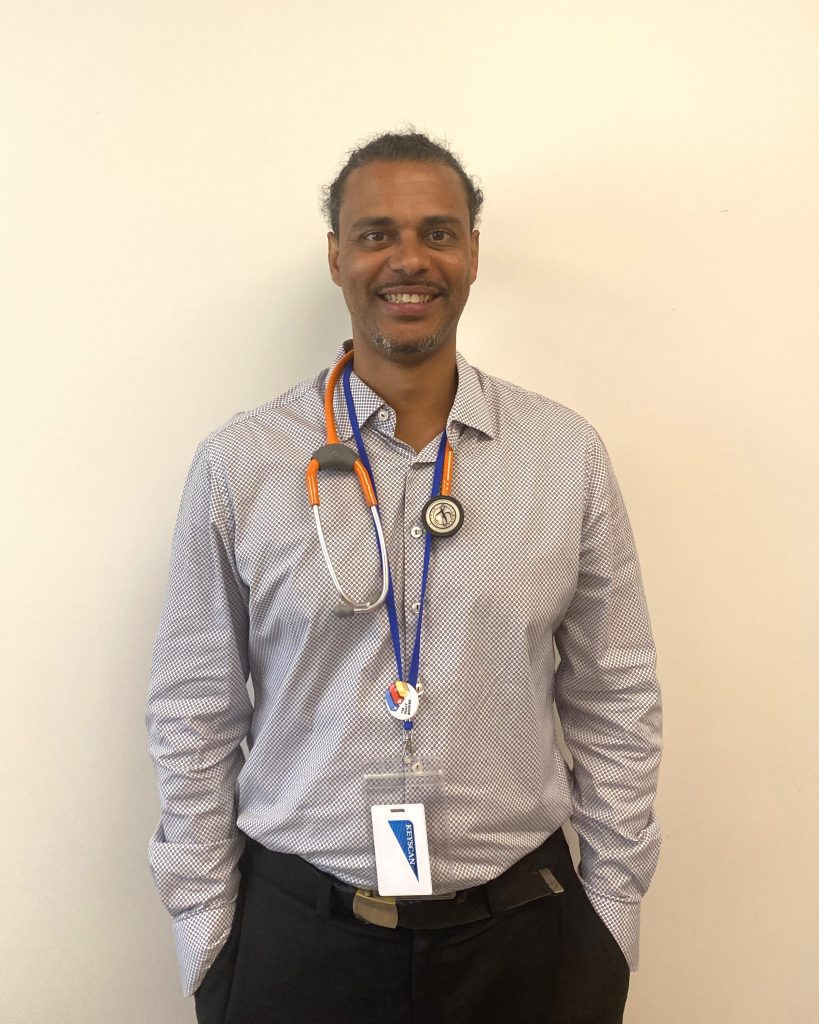
    Clement Bélanger Bishinga stands against a plain white wall at RISE Community Health Centre. Smiling with his hands in his pant pockets, he is wearing an orange stethoscope and blue lanyard around his neck.
    Clement Bélanger Bishinga

    Mentorship in the medical field 

    While Clement is now a practicing doctor, he considers his path untraditional. Before studying medicine, he was working in economics but soon realized that it was not for him. 

    Growing up, Clement said he viewed medicine as either working in international aid or doing it for prestige. Uninterested in either route, he eventually took a leap into the medicine field of his own accord. While it hasn’t always been easy navigating the field, Clement said the outcomes have been rewarding. 

    “I feel in medicine . . . the knowledge is sometimes kept a little bit in a certain group,” said Clement. “I think, especially in Black communities, feeling that you need tips or direction, or you need mentorship sometimes to be able to get into those programs.” 

    Thinking about his journey into his current profession, Clement said the one thing he wishes he had was a mentor along the way that identified as Black. 

    “I feel that’s a place that I would like to continue to invest myself for future generations.” 

    Uplifting future generations 

    Thinking ahead to future generations is a big theme for Clement, who struggled to connect with Black history and community in Quebec City. 

    “When I grew up, I think I had to search for myself for that type of information,” he said. “In some ways, I don’t think I knew about Black History Month until I was 17 or 18 because the community school that I went to was celebrating it, but it was never celebrated in my high school.” 

    “Sometimes, [I feel] like missing some parts of history is quite real.” 

    As an adult, Clement has now lived in other cities where there is a larger presence of the Black community, which has made a big difference. 

    Thinking about this year’s theme for Black History Month, Clement said, “The biggest part was the uplifting.” 

    “You know, you want to make the future greater for the next generation,” he said. “I would like my nieces and nephews to live in a world where there’s more equality or equity around Black communities.” 

    While Clement recognizes that everyone’s experiences are unique, “it’s more the attitude that I want to pass on,” he said. In the past, he has been with older generations who say they “had it tougher.” 

    “I don’t know if it’s easier [today] but there is also this attraction in some way for me in helping the younger Black generation, to work with them, because there’s potentially an innate connection with them and it makes it for a chance for some kind of shared experience to be there,” said Clement. “The reality of every group is different so sometimes when you have a bit of a connection, it just makes it interesting.” 

    Volunteering 

    Today, Clement is a member of the Black Physicians of Canada, a social network, mentorship program and advocacy group for Black physicians. Supporting other Black physicians who have similar experiences as Clement has been an important value for him. He is also a member of the Black Resident Physicians’ Association of BC. 

    When he lived in the United States for part of his education, Clement also tutored in a youth incarceration centre in Illinois. While not explicitly a centre for Black people, Clement said Black people were “quite overrepresented.”  

    “It was tutoring but the students knew a lot of stuff already,” he said. “I think it was like a game for them and for me to have someone from the outside and having these two or three hours where they’re in this very small library we ended up doing a lot of chatting.” 

    “I think that’s what I like the most, is to create a network,” he said. “I have those networks of like Black Physicians of Canada and Black Resident Physicians of BC but those are also more connected to my profession. I would like for it to be more broad.” 

    Community building and celebration

    Overall, Clement said celebrations like Black History Month, which takes place annually throughout February, are a good opportunity to highlight events, create support and make connections within the Black community. 

    “It has a different purpose for different people,” he said. “In some way for me, this year’s Black History Month has been more about community building.” 

    “I think there is this strong advantage of having a Black History Month, just to celebrate each other and embrace who we are, and then there’s always motivation to learn a little bit about the history.” 

    For Clement, he said it’s also an opportunity for him to explore what Blackness is and what the community is. 

    And for those outside of the community? 

    “It’s really about showing up, participating and maybe even going out of your comfort zone in terms of events you could attend,” said Clement, who noted that financial contributions to Black organizations is another option for those who cannot physically show up within the community. 

    “Keep your ears open and your heart open to whatever kind of struggles or emotions that you know a member of the Black community might have and also embrace it with humility.” 

    This story was originally written to celebrate Black voices in Renfrew-Collingwood. We encourage everyone to learn about Black Canadian history throughout the year and how Black Canadians continue to shape our communities.

  • Apply now: 2025 Nina Vacca scholarship for early childhood education

    Apply now: 2025 Nina Vacca scholarship for early childhood education

    Collingwood Neighbourhood House (CNH) is pleased to open applications for this year’s scholarship of $750 in honour of long-term staff, Nina Vacca.

    Presented by the CNH Board of Directors, the Nina Vacca Scholarship is awarded to a Renfrew-Collingwood community member who is pursuing the field of Early Childhood Education. Applications are open to all newcomers.

    How to apply

    Apply online by Sunday, July 27, 2025. For questions, please call 604-435-0323 or email info@cnh.bc.ca.

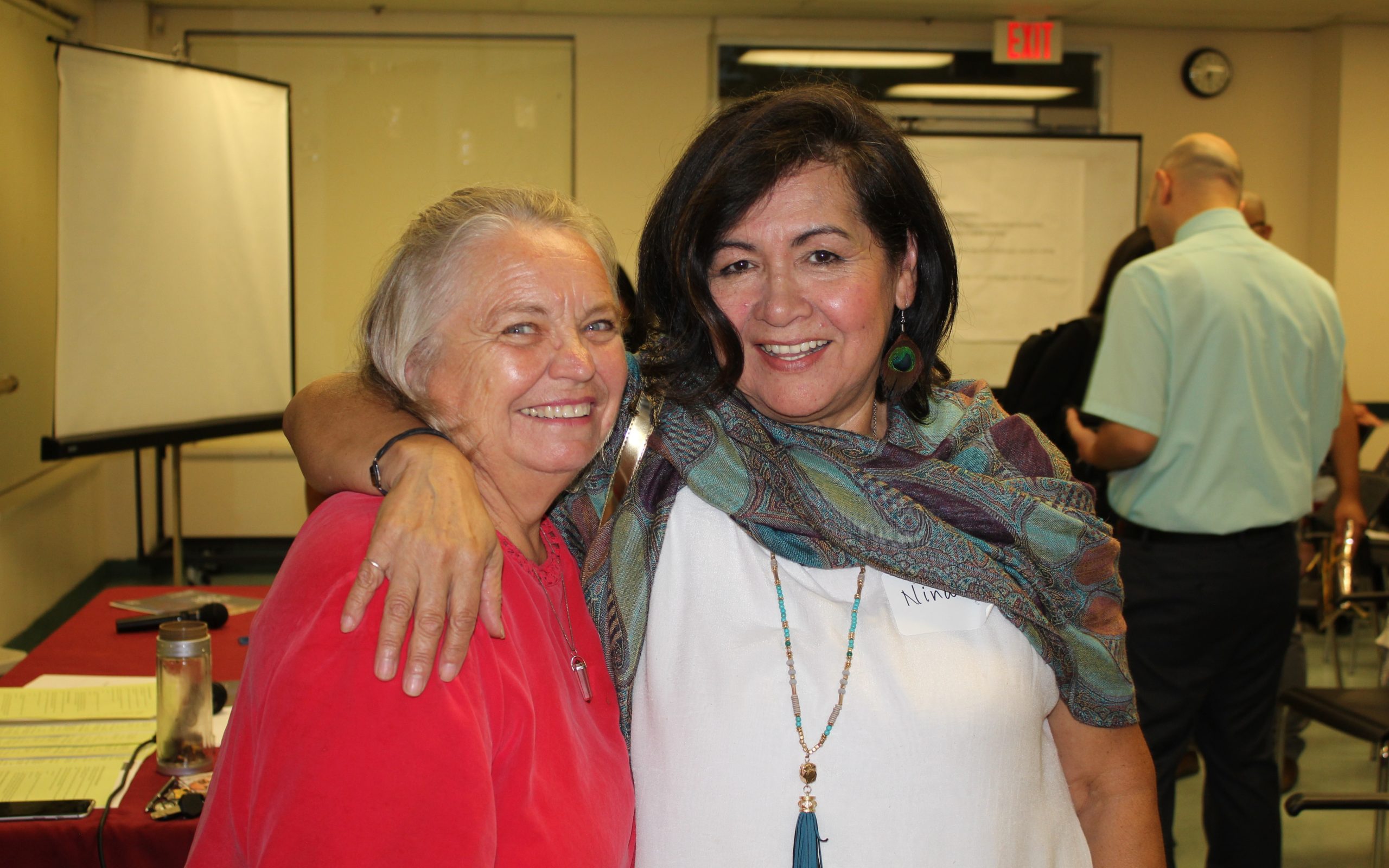
    A portrait photograph of Nina Vacca
    Nina Vacca

    Nina’s legacy at CNH

    Nina arrived in Canada as a refugee and was a lifelong learner; she pursued her Early Childhood Education certificate later in life. 

    Nina worked at CNH for over 25 years. Her roles included manager of the LINC (Language Instruction to Newcomers) childcare program and childcare worker in the Families Branching Out and Family Place programs. She always showed a lot of love and care in the work she did with children. 

    Her contributions and work did not stop with her caring for children at CNH: she volunteered in her community every year to organize events for the Chilean community. 

    “Nina was a great support to my son and me in the first months of our arrival in Canada. She listened to us and empathized with my son and me. She had arrived 15 years before us. She was my son Juan Carlos’ first English teacher in Canada, and she comforted my son Juan Carlos when he was frustrated.”

    Nina passed away in 2021. Nina’s legacy is celebrated by CNH through this scholarship. 

  • 2024 participant survey responses released

    2024 participant survey responses released

    Last summer, Collingwood Neighbourhood House (CNH) conducted its most recent participant survey. These surveys aim to capture insight from the CNH community every two years and share what’s working, as well as areas of improvement.

    After reviewing responses from 176 people, we are pleased to share our key findings from our 2024 survey.

    65% of participants live in the Renfrew-Collingwood neighbourhood. With nearly 80% of participants indicating they participated in CNH activities multiple times a week, this suggests that CNH has been successfully engaging local residents through various programs, including recreation, child care, Collingwood Days, RISE Community Health Centre, and more.

    • 65% agree that CNH is a place where they feel belonging
    • 63% have opportunities to become involved or give input into CNH’s future direction
    • 46% met people of different cultures, ages and abilities
    • 35% made new friends participating in programs at CNH

    Results also indicate that CNH continues to help build a strong sense of connection and participation in the community.

    So, how are we doing?

    In 2023, CNH worked with an external consultant to define our current strategic plan. Our plan focused on three priority areas: Anti-oppression, advocacy and organizational foundation. Below is a summary of responses, based on the participant survey results, that indicate what we’re doing well and areas for improvement in each area.

    Six adults and one child smile towards the camera inside the kitchen at CNH. On the counter are over a dozen jars of homemade canned goods.

    1. Anti-oppression

    What we’re doing well

    • The survey indicates that CNH is seen as inclusive and welcoming by many participants. Participants frequently praised the kindness, professionalism, and helpfulness of the CNH staff, emphasizing the supportive atmosphere they foster.
    • Participants reported meeting people from diverse backgrounds and feeling a sense of belonging. Many participants appreciated CNH’s role in fostering community engagement and inclusivity.
    • Many programs cater to equity-seeking groups, including seniors, youth, and newcomers. Affordable and accessible programs are a significant strength with 41% of participants saying that the low cost of programs and services is essential to their participation.

    Opportunities for improvement

    • Some participants mentioned challenges in creating a culturally representative environment, including a lack of Indigenous representation and programming tailored for neurodivergent individuals, those with disabilities and middle-aged adults.
    • Expanding outreach efforts to underrepresented groups and improving multilingual communication could enhance representation and accessibility.

    2. Advocacy

    What we’re doing well

    • 65% of respondents feel they have opportunities to engage in CNH’s future direction
    • Participants noted that programs such as food justice, housing outreach, and seniors’ programs demonstrate CNH’s community-based approach to advocacy. Programs providing practical support, such as food security initiatives, were particularly valued
    • Community members have participated in feedback mechanisms such as surveys, AGMs and committees

    Opportunities for improvement

    • Participants cited long waitlists for childcare, limited space for programs, and ongoing funding concerns
    • Participants requested enhancements in digital accessibility and user-friendly registration systems
    • Youth employment and volunteer opportunities were mentioned as areas for development

    3. Organizational foundation

    What we’re doing well

    • CNH is recognized for having dedicated staff and volunteers, with many participants citing positive interactions with staff and feeling supported.
    • Programs attract a broad range of participants, and CNH is seen as a vital community hub.
    • The recreation and childcare programs are among the most highly engaged services as reflected by survey responders

    Opportunities for improvement

    • Securing consistent funding and ensuring adequate staffing were highlighted as ongoing challenges
    • Some respondents noted difficulties with program awareness, communication, and registration processes, while others requested more evening and weekend programming
    • Limited program space and infrastructure were cited as barriers to expansion

    Next steps

    Our roadmap to addressing community needs and aspirations includes:

    1. Enhancing communications: Strengthen outreach strategies to improve program visibility and ensure participants are aware of available services
    2. Expanding accessibility: Develop targeted initiatives to address the needs of underrepresented groups, including neurodivergent individuals and Indigenous communities
    3. Securing resources: Explore additional funding opportunities to support program expansion and staff capacity
    4. Celebrating impact: Share participant stories and feedback to demonstrate CNH’s value to the community and encourage greater engagement

    For more information on the 2024 participant survey responses, review a summary of findings in PDF format: short version or long version.

  • Update to IRCC funding cuts: Affected programs and new funding opportunities 

    Update to IRCC funding cuts: Affected programs and new funding opportunities 

    Thanks to the generous support from community partners, Collingwood Neighbourhood House (CNH) is pleased to announce that some settlement programs impacted by federal budget cuts will remain open, either temporarily or on an ongoing basis. 

    Earlier this year, we announced the decision from Immigration, Refugees and Citizenship Canada (IRCC) to cut our entire funding, which has supported settlement programs at CNH for over 30 years. This decision was made with little time to coordinate a transition plan, which took effect on March 31, 2025, affecting hundreds of participants, multiple programs, 20 staff positions and overall access to key services in our community. 

    Since this announcement, CNH has been working to find solutions that address programs, staff and participants affected by this loss. 

    Within the last two months, we received assistance from the Dr. Bik May Wai & Chung Nin Lam Endowment Fund to support youth settlement programs, which allows these programs to remain open until March 31, 2026. We have also received a subcontract with MOSAIC to support LINC (Language Instruction for Newcomers) levels 1 to 4, which will operate until the end of December 2025. In addition, we continue to receive ongoing funding from the provincial government, which provides one settlement worker and restorative circles. 

    CNH is grateful for this support, but we recognize that there continues to be a gap in services, especially as some of our funding sources are temporary. Further, we recognize that some staff and community members remain affected by budget cuts. 

    Up until March, IRCC was our organization’s second-largest funding source. While community members will not have access to the same level of service previously provided with this funding, CNH remains committed to providing settlement programs, if and when possible. As such, we continue to seek other funding sources to integrate into affected programs. 

    As we move forward, our priority continues to ensure the well-being of our staff, students and community members impacted. Currently, we are working with Vancouver Neighbourhood House Settlement Serving Organizations and the Association of Neighbourhood Houses BC to challenge the lack of settlement supports with federal parties. 

    For more information about affected programs, please see below. For additional questions, contact info@cnh.bc.ca.

    Affected programs 

    Aurelia M. makes cookies with her two children at CNH’s community kitchen program in November 2024. Open to newcomers, the program allowed participants to gather and learn to cook together.

    Ongoing and temporary programs

    • Art ongoing with reduced hours 
      • Art classes, including our weekly Make Your Mark program (open art studio) and origami circle 
    • Food 
      • Community kitchen for newcomers – paused due to limited capacity 
      • Food land programs (i.e. community gardens) – ongoing with reduced hours
    • Settlement 
      • BC Newcomer Services Program / BC SAF HAVN Program facilitated by one settlement worker – ongoing, through provincial funding 
      • LINC (Language Instruction for Newcomers) levels 1, 2, 3, 4 – funded until the end of December 2025 through a subcontract with MOSAIC 
      • Restorative circles (new) – ongoing, through provincial funding 
    • Youth funded until March 31, 2026 through the Dr. Bik May Wai & Chung Nin Lam Endowment Fund
      • After-school mentorship 
      • Leadership and pre-employment mentoring 
      • Music programming 
      • Sports programming 

    For program descriptions, visit: www.cnh.bc.ca/settlement   

    Programs closed as of March 31, 2025: 

    • Employment services for newcomers 
    • General settlement services provided by a team of settlement workers who work in multiple languages (i.e. navigating social services, finding employment resources, referrals for English language training and support, and life skills training and group workshops) 
    • LINC (Language Instruction for Newcomers) levels 5, 6, 7 
    • LINC conversation circles 
    • Women’s leadership development 

    Frequently asked questions

    On March 8, 2025, the settlement team at CNH hosted its annual celebration for International Women’s Day. Program participants of all ages gathered over food, music and yoga.

    Funding

    Programs & Resources

    Impact

    Supporting settlement services at CNH

  • Registration for the 2025 Community Care Harvest Box program opens

    Registration for the 2025 Community Care Harvest Box program opens

    Registration is now open for our 2025 Community Care Harvest Boxes!

    The Community Care Harvest Box program at Collingwood Neighbourhood House (CNH) is a subscription-based veggie box that provides direct relationships between farmers and community members. This summer, we’re partnering with FreshRoots!

    For two months, registrants will receive a weekly box of fresh vegetables, available for pickup at CNH (5288 Joyce St), while supporting our low-income neighbours.

    What is a community care harvest box?

    A community care harvest box is not your average food subscription service. While this program allows registrants to access 8-16 weeks of fresh vegetables through FreshRoots, a portion of the registration fees is allocated to supporting community members experiencing food insecurity.

    For some of our neighbours, the cost of fresh vegetables, let alone a local harvest box, is out of reach financially. By paying for a community care harvest box, you help low-income community members access fresh produce at a reduced rate. These members sign up for the program through a separate, referral-based stream.

    If you are unable to afford or commit to a community care harvest box, but are interested in supporting this program, you can make a donation to the program. All funds will go towards subsidizing a harvest box for a neighbour in Renfrew-Collingwood experiencing food insecurity.

    Alternatively, stop by CNH during pick-up times (Fridays, 4-6 pm; dates below) to visit our pay-what-you-can market!

    Key Dates & Registration

    Two people stand together underneath a white tent outside holding strawberries and celery as they smile towards the camera
    • Session 1 (early season): June 13 to Aug. 1 (8 weeks)
    • Session 2 (late season): Aug. 8 to Sept. 26 (8 weeks)

    During the season, boxes can be picked up on Fridays from 4-6 pm in front of CNH (5288 Joyce St). If you want to receive 16 weeks of vegetables, you are welcome to sign up for both seasons!

    Cost

    Each session is $320, which includes eight weeks of fresh vegetables through FreshRoots and a portion of the fees allocated to subsidizing boxes for community members experiencing food insecurity.

    How to Register

    Register online through our registration portal. For questions, email Ross at roh@cnh.bc.ca.

  • A youth perspective on bringing seniors together

    A youth perspective on bringing seniors together

    Hello to the Renfrew-Collingwood community! My name is Mya Stanton, and I’ve been involved with Collingwood Neighbourhood House (CNH) for two years. I originally joined as a summer work-learn student employee, and I currently volunteer with the social prescribing (SP) program, which bridges health and social services for seniors and older adults.

    This January, as part of a UBC class, I took on an additional project: organizing a seniors’ coffee social and discussion on isolation and aging. I noticed many seniors I work with had few opportunities to stay connected, so I wanted to create a space for interaction, while also exploring what can make socializing so difficult. We hosted four events across Feb. 11 and 25, and March 11 and 24, with the final session in Mandarin, thanks to SP coordinator Jenny Shen’s support, sharing my questions with her Chinese senior peer support group.

    The events brought together about eight seniors across all four sessions. While that might seem small, I found that having fewer participants was actually well-suited to the goals of the project. At our most well-attended session, one senior barely spoke about himself, but when he attended a smaller session later on, he opened up much more. I realized soon that focusing too much on turnout numbers could actually isolate the target demographic, so I am glad it stayed more intimate.

    A personal highlight of attending the events myself was the intergenerational connections I made. As a university student, I don’t often get the chance to engage with people outside my own age group. I found I had a lot of common interests (animals were a big one!) and I learned how much I take for granted generational references being understood–like when I mentioned Marvel movies and the participants were not sure what I was talking about. It was a bit of a humorous learning moment that reminded me to be mindful of different backgrounds in conversation.

    For anyone looking to plan similar events, here are a few key takeaways from my experience:

    • Smaller, more intimate settings work well. More isolated seniors may be hesitant to speak in large groups, so keep in mind who your audience is, and consider asking what attendance is preferred.
    • Language accessibility matters. As an English-only speaker, I initially overlooked how this might exclude a large part of the community. I’m incredibly grateful that Jenny could support the final session in Mandarin.
    • Have a flexible structure. Discussion prompts helped keep things flowing when conversations slowed down, but some of the best moments came from just letting discussions unfold naturally.
    • Sustained events are important. A single event is great, but recurring programming allows participants to build relationships and have something reliable to look forward to. However, there are challenges with keeping attendance consistent with smaller groups.

    Overall, I’m so glad I got to be part of this project. As someone interested in working in the community after I graduate, this experience was insightful. If you’re thinking of planning seniors’ social events, I highly recommend not only considering what I have to say, but also consulting seniors directly, asking what an ideal social event looks like to them. There’s so much to learn from other generations–the connections I have made at CNH are ones I cherish!

    For more information on programs for seniors and older adults at CNH, visit cnh.bc.ca/seniors.